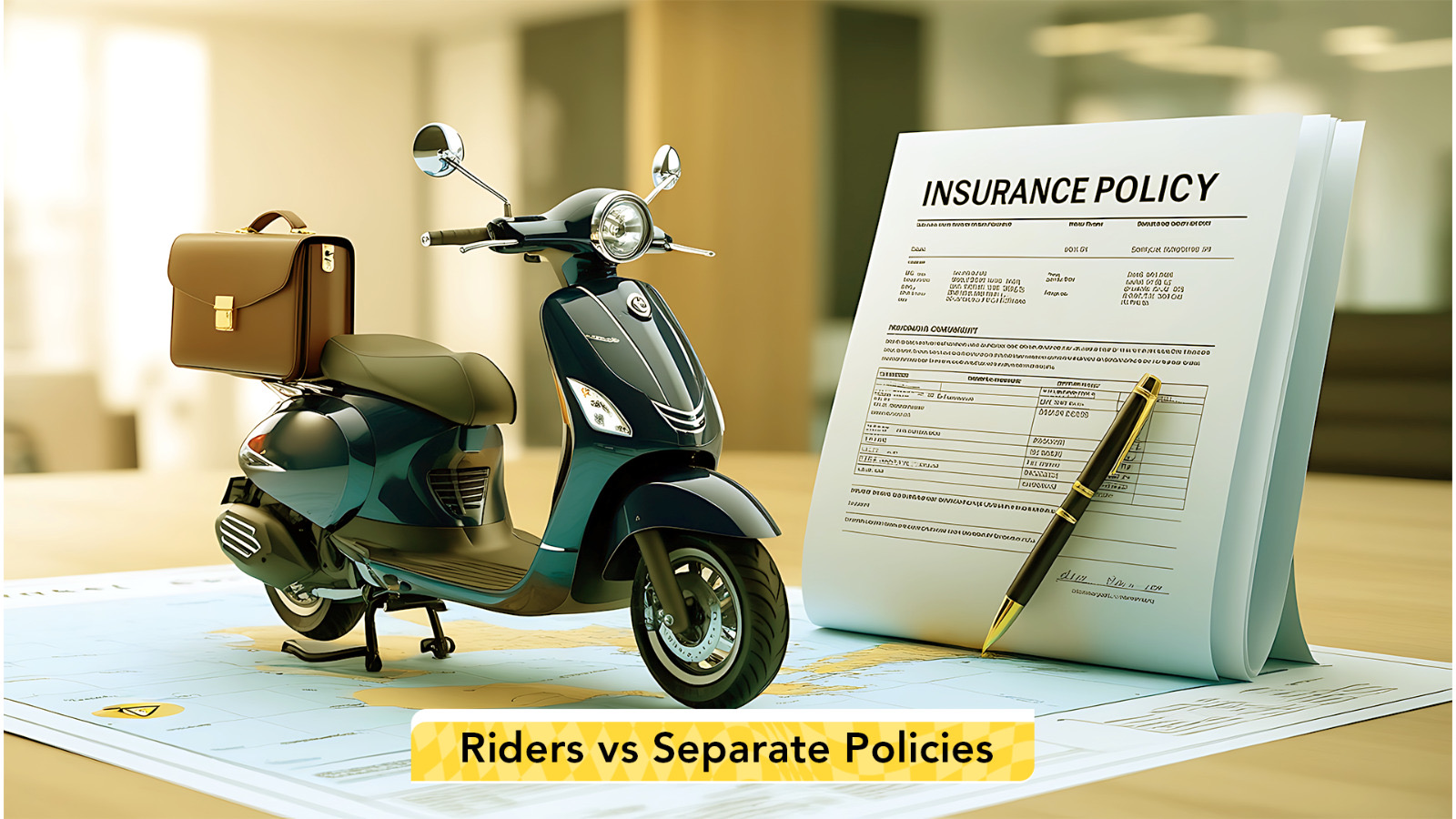
When you buy insurance in India, be it health or life insurance, you’re often given an option to boost your coverage by adding a rider (not the kind that rides a bike!). A rider is basically an add-on benefit to your main policy, like an extra topping on your food. It gives you additional coverage for a specific need but only works as part of the main policy. On the other hand, a separate policy is a standalone insurance plan you buy independently, Think of it as ordering a whole separate dish. This blog will break down the key differences between riders and separate policies in simple terms.
We’ll compare riders and separate policies across a few points like cost, coverage, policy duration, convenience, and flexibility. So you can make an informed choice.
What’s the Real Difference Between a Rider and a Separate Policy?
A rider is always attached to a base insurance policy, it’s not sold by itself. In plain terms, a rider is like a sidekick to your main policy (like Robin to Batman). For example: You might add a critical illness rider to your life insurance or health insurance, This rider will only work as part of that main plan.
A standalone policy doesn’t need a base policy to lean on, it works independently. If you feel your basic health insurance is missing something, you could either attach a rider (if available) or buy a separate policy to cover that gap.
Remember: A rider is add-on to an existing policy, while a separate policy is independent policy.
When Does a Rider Save You Money and When Does a Separate Policy Work Better?
The biggest advantage of riders is cost, they are typically much cheaper than buying a brand-new insurance policy for the same benefit. This is because a rider’s coverage is usually limited to a specific scenario, making it less expensive. For instance, adding a personal accident rider or hospital cash rider to your health plan will cost less than paying for a whole separate accident insurance or daily cash policy.
However, that brings us to coverage. A separate policy generally offers wider or more comprehensive coverage than a rider. Since it’s a full-fledged policy, it often covers more conditions or provides a higher sum assured than a rider can.
In fact, standalone health insurance plans tend to provide larger coverage amounts (with higher premiums to match) compared to riders attached to life or health policies. Basically, a rider is a budget-friendly mini-cover, whereas a separate policy is like a deluxe package. Go for a rider when you only need a specific extra protection on a budget; opt for a separate policy when you want a broader, robust cover and are willing to pay more.
What Happens to Your Cover if the Main Policy Stops?
When it comes to how long coverage lasts, riders depend entirely on the main policy’s lifespan. If your main policy expires or lapses, the rider goes down with it, No solo survival. For instance, if you have a 20-year term life insurance with a critical illness rider, that rider will end after 20 years alongside your term plan.
In contrast, a standalone policy doesn’t hinge on another policy’s timeline. You can usually renew a separate health insurance or accident policy for as long as the insurer allows (Health insurance plans in India are renewable for life). That means separate policies offer more continuity. Even if your main policy finishes, your separate cover can keep going as long as you continue renewing it.
Convenience: One Premium vs. Multiple Policies to Track
Managing payments and paperwork is another area where riders and separate policies differ. Adding riders means you have just one combined insurance plan to deal with. You pay one premium (the rider’s cost simply gets added to your main policy premium) and renew one policy, which is pretty convenient. There’s less chance of forgetting renewal dates or losing track of different policy documents because everything is bundled together.
On the flip side, separate policies require more juggling. If you take a separate policy for additional cover, that’s a whole new premium to pay and another renewal date to remember. You might end up with multiple insurance cards, separate paperwork, and more effort spent keeping an eye on each policy’s status. It’s manageable, but definitely extra work. If you’re the forgetful type who can’t even remember where you kept your bike keys, a rider might save you some headaches in the admin department!
Which Gives You More Freedom: Rider or Separate Policy?
Riders can be somewhat restrictive in terms of customization. They are offered by the same insurer as your main policy and come with preset terms. They often come with conditions or caps linked to the main policy (Basically, a rider’s coverage amount might not exceed the base policy’s coverage). Also, insurers only offer certain types of riders. If you want coverage for something your insurer doesn’t provide as a rider, you may be out of luck unless you buy a separate policy. In short, riders give you only a handful of convenient add-on options, but flexibility is limited.
By contrast, taking a separate policy opens up your choices. You can shop around with different insurers for specialized coverage or better terms. You decide how much sum insured you want, independent of any other policy’s limits. Separate policies thus offer more freedom to mix and match coverage as you see fit. The trade-off is that this freedom comes with a higher cost and a bit more effort to manage, as noted above.
Should You Choose a Rider, a Separate Policy or Both?
At the end of the day, riders vs separate policies is all about what you need and what you’re comfortable managing because there’s no one-size-fits-all answer. If you value simplicity, lower cost, and don’t need a ton of extra coverage, riders can be your best friend. They’re easy on the pocket and hassle-free. If you need extensive coverage or want the flexibility to customize every aspect of your insurance, a separate policy (or even multiple policies) might be the way to go, provided you’re okay with the extra premiums and some extra admin work. Many people in India use a mix of both.
For example: Taking a term life plan with a critical illness rider for extra protection, and also owning a standalone health insurance plan for broader medical coverage.
In any case, make sure to read the policy and understand what you’re getting. A rider won’t cover everything a full policy would, and a separate policy might overlap with existing coverage if you’re not careful. So, check your needs and choose the option that gives you peace of mind. Whether you ride on with a rider or stand alone with a separate policy, the goal is to stay protected without breaking the bank or complicating your life.
Not sure what insurance you actually need?
The free Inka Insurance Report helps you understand your health insurance, term insurance, and critical illness needs based on your profile, responsibilities, existing cover, and protection gaps before you compare policies.