Introduction
Buying term insurance often feels like a big achievement. You finally tick off an important financial task and feel secure about your family’s future. But what if, after a few days, you start doubting your decision? Maybe someone told you there’s a better plan, or you noticed something confusing in your policy document.
This is where most people panic. They think, “I’m stuck with this for years now.” But that’s not true. Insurance companies actually give you a small window to rethink your decision. It’s called the free-look period in term insurance, and it’s designed to protect you from making rushed or wrong choices.
Think of it like a safety net. You don’t need to be an expert before buying a policy; you just need to be smart enough to review it afterwards. And this blog will help you do exactly that, step by step.
What Is the Free-Look Period in Term Insurance?
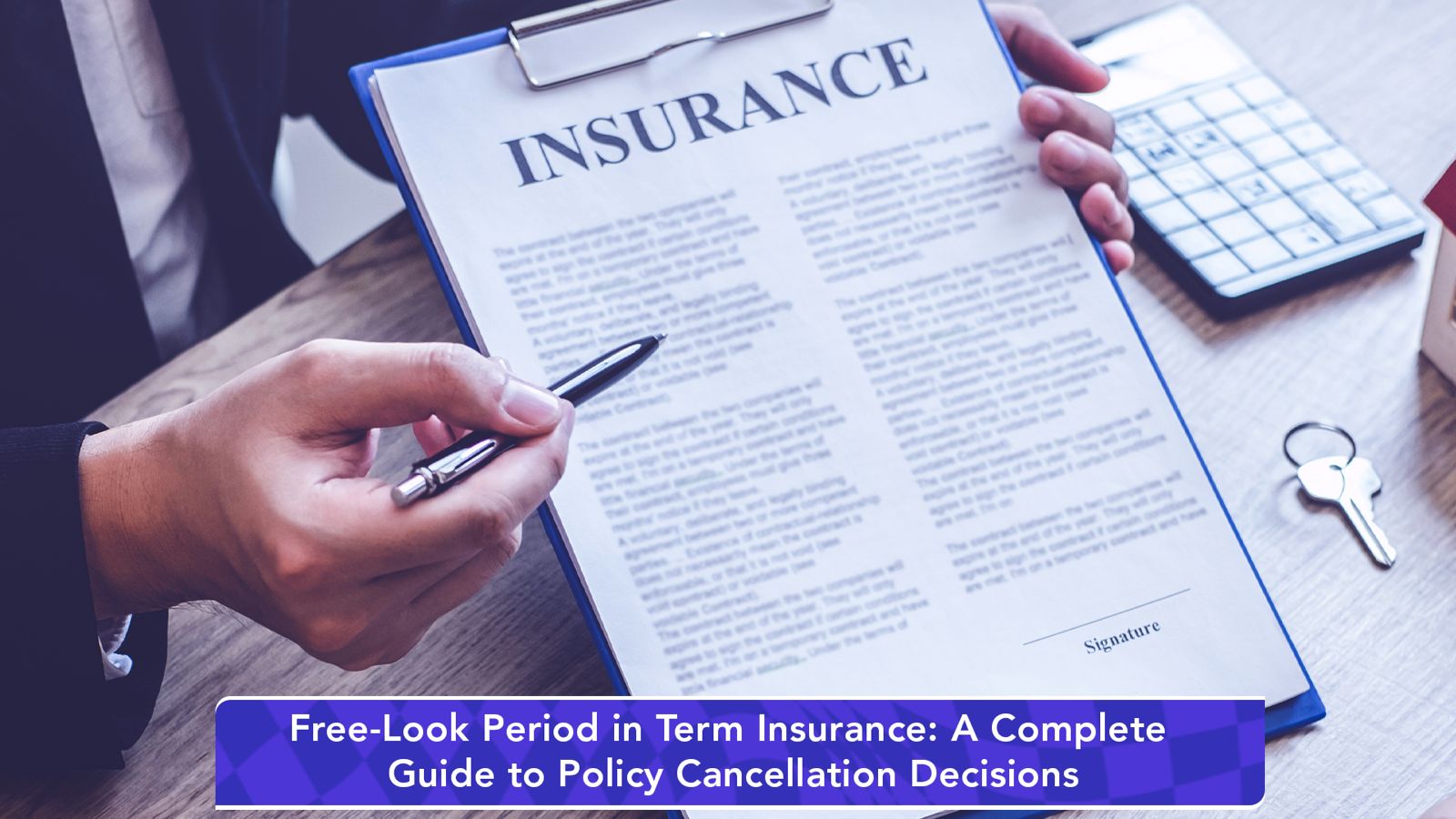
The free-look period in term insurance is a limited time given to you after receiving your policy document. During this period, you can carefully read, understand, and evaluate whether the policy matches your expectations. If it doesn’t, you have the right to cancel it.
As per IRDAI guidelines, the insurance period is currently 30 days for life and health insurance policies. This applies whether you bought the policy online or offline. However, some older documents may still mention 15 days, so always double-check your own policy.
You might buy a policy thinking it’s perfect, but once you read the terms, you may find gaps. The free-look period ensures you’re not locked into something you don’t fully agree with.
Example:
Suresh buys a term plan believing it covers accidental death and critical illness. After receiving the document, he realises only death is covered, and no critical illness benefit is included. Within the free-look period, he cancels the policy and chooses one that actually meets his needs.
Understanding the 15-Day vs 30-Day Free-Look Period
According to the latest IRDAI guidelines, the standard free-look period is 30 days. This update was introduced to give policyholders more time to understand their insurance without pressure.
However, confusion still exists because older policies or articles may mention 15 days for offline policies and 30 days for online (e-distance) policies. This difference existed earlier, but recent reforms have made it more uniform and consumer-friendly.
That said, you should never rely only on general information. Your actual policy document is the final authority. Always check the exact number of days mentioned in your policy and the starting date, which is usually calculated from the day you receive the document. A small misunderstanding here can cost you the chance to cancel.
When to Use the Free-Look Period in Term Insurance
The free-look period in term insurance should not be used casually. It’s meant for genuine situations where the policy does not meet your expectations or needs. Knowing when to use it can save you from long-term financial mistakes.
One of the most common reasons is buying the wrong type of policy. Many people confuse term insurance with investment plans. If your goal is high protection but your plan focuses on returns, it may not be suitable for you.
Another reason is misunderstanding the benefits. Insurance documents can sometimes feel overwhelming, and it’s easy to miss important details during purchase. When you finally read everything properly, the reality might be different from what you assumed.
Example:
Anita buys a policy thinking it provides ₹1 crore coverage. Later, she realizes that the high coverage applies only under certain conditions, and the base coverage is much lower. This mismatch is a valid reason to use the free-look period.
You can also use this period if you notice unclear terms, unexpected exclusions, or conditions that make you uncomfortable. It’s better to step out early than regret later.
How Refunds Work in the Free-Look Period
When people hear about term insurance cancellation, the first question they ask is: “Will I get all my money back?” The honest answer is, not exactly.
Insurance companies usually deduct certain charges before processing your refund. These may include:
- Medical examination costs (if tests were conducted)
- Stamp duty charges
- Proportionate risk premium for the days you were covered
These deductions are part of standard term insurance refund rules, and they are completely normal.
Example:
Rahul pays ₹12,000 as his annual premium. After 12 days, he decides to cancel during the free-look period. The insurer deducts ₹1,200 for medical tests and ₹300 as risk premium. He receives around ₹10,500 as a refund.
While it may feel like a loss, it’s actually a small price for correcting a potentially big mistake. Keeping a wrong policy for years would cost far more.
How to Decide Between Cancelling or Continuing Your Policy
This is one of the most important decisions during the insurance policy review period. Not every doubt means you should cancel. You need to evaluate your situation calmly and logically.
You should consider term insurance cancellation if the policy clearly does not meet your needs. For example, if the coverage is too low, the premium is unaffordable, or essential benefits are missing, cancelling makes sense.
However, avoid cancelling based on random opinions or fear. Many people get influenced by friends or online comments without fully understanding their own policy. This can lead to unnecessary cancellations and confusion.
To make a better decision, ask yourself:
- Does this policy provide enough financial protection for my family?
- Can I comfortably pay the premium over the long term?
- Do I clearly understand the benefits and conditions?
If the answer to these questions is “no,” cancellation may be the right choice.
What Happens After the Free-Look Period?
Once the free-look period for term insurance ends, your flexibility significantly reduces. You can no longer cancel the policy and expect a refund under normal conditions.
Your options after this period usually include:
- Surrendering the policy (often with financial loss)
- Letting the policy lapse by stopping premium payments
- Continuing with the policy even if it’s not ideal
These options are not as beneficial as cancelling within the free-look window. That’s why this period is so important.
Many people delay reviewing their policy and miss this opportunity. Later, they realise the policy isn’t suitable but have no easy way to fix it.
Not sure how much term insurance you need?
Your income, loans, dependents, and financial responsibilities affect the right life cover amount. The free Inka Insurance Report helps estimate your protection needs before you compare term insurance plans.
Final Thought
The free-look period in term insurance is one of the most underrated benefits given to policyholders. It’s your chance to pause, review, and correct your decision without major consequences.
Most people either ignore this period or misunderstand its importance. But if used wisely, it can protect you from years of financial mismatch and stress.
Here’s something to think about before your free-look period ends:
If your family had to depend on this policy tomorrow, would it truly support them the way you expect?
If the answer is uncertain, don’t ignore that feeling. This small window exists for a reason. Use it wisely, make informed decisions, and ensure your insurance truly does what it’s meant to do: protect the people who matter most.