Think about the last time you bought a smartphone. You probably compared prices, checked reviews, explored features, and researched before making a decision.
Now ask yourself: Did you spend the same effort comparing your insurance policy?
For many people, the answer is no. They choose insurance based on recommendations without comparing options or fully understanding their policy.
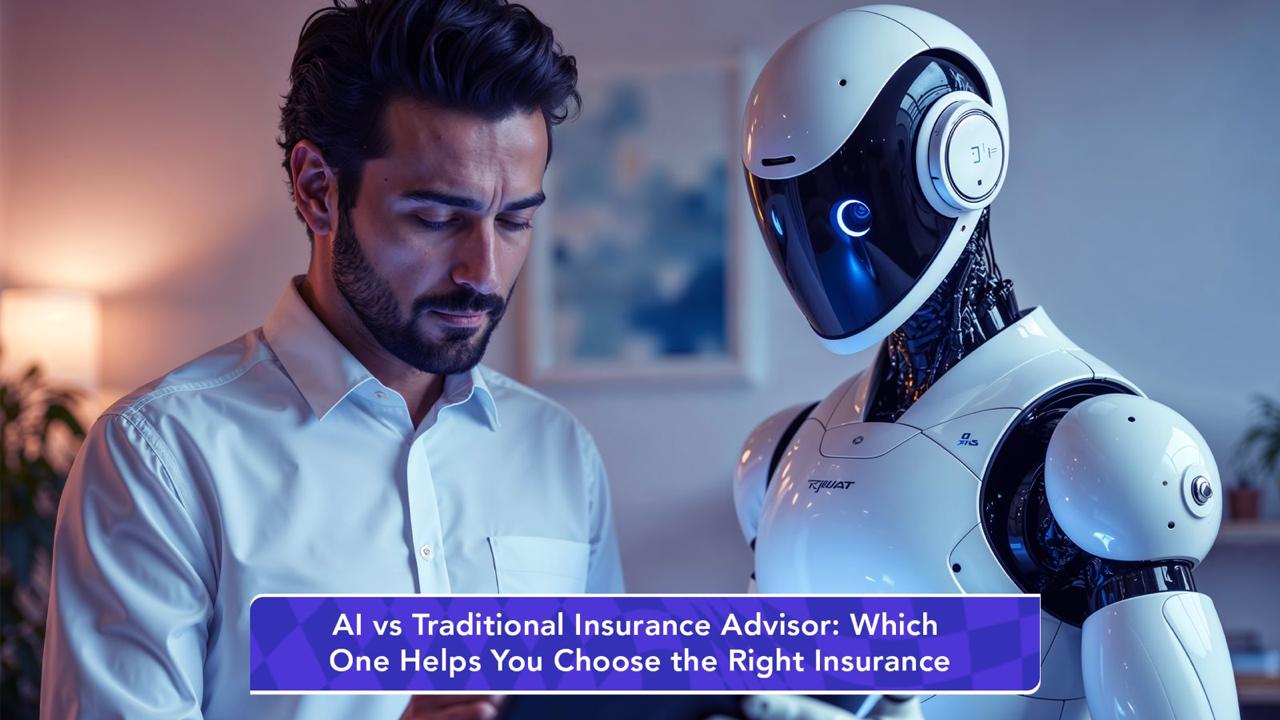
This is why the discussion around AI insurance advisors versus traditional insurance advisors is becoming increasingly important.
AI helps people compare insurance plans, understand policy terms, and evaluate their choices, while human advisors provide valuable guidance for family needs, medical conditions, and complex claims.
In this blog, you’ll learn the key differences between AI insurance advisors and traditional insurance advisors, where each works best, and how combining both can help you make better insurance decisions.
Why Choosing the Right Insurance Advice Matters
Buying insurance isn’t just about paying a premium every month. It’s about protecting your family’s finances when life takes an unexpected turn.
Imagine two friends, Rahul and Karthik.
Rahul buys the first health insurance policy recommended by an advisor without comparing other plans. Karthik compares policies, understands waiting periods, hospital coverage, and claim features before making a decision.
When both require hospitalization a few years later, Rahul discovers that several treatment expenses aren’t covered. Karthik’s policy covers most of the costs because he selected a plan that matched his needs.
The difference wasn’t luck. It was making a better decision before buying the policy.
That’s why understanding insurance advice is just as important as choosing the insurance itself.
What Is an AI Insurance Advisor?
An AI insurance advisor is a technology-powered assistant that helps you understand insurance in a simple and unbiased way.
Instead of depending on one person’s recommendations, AI can compare plans across multiple insurers, explain policy clauses in plain language, and answer your questions instantly.
For example, you can ask:
- Which health insurance plan offers better coverage for my parents?
- Why is one premium more expensive than another?
- What does a waiting period actually mean?
AI explains these concepts using simple examples instead of technical language, making insurance easier to understand for first-time buyers.
AI can compare products across the market, answer questions without knowledge limitations, and provide consistent information whenever you need it.
What Does a Traditional Insurance Advisor Do?
A traditional insurance advisor is a licensed professional who helps customers choose insurance policies, complete applications, and often supports them during claims.
Their biggest strength is understanding people.
A good advisor considers your income, family responsibilities, financial goals, and future plans before recommending suitable insurance.
For example, a newly married couple planning for children may need different insurance than someone preparing for retirement. An experienced advisor can understand these situations and recommend accordingly.
However, advisors are generally associated with one insurer or a limited number of insurance companies. Naturally, they have deeper knowledge of the products they regularly sell but may not be equally familiar with every policy available in the market.
That doesn’t mean their advice is wrong. It simply means the range of options they present may be narrower than the full market.
AI vs Traditional Insurance Advisor: What’s the Real Difference?
Both AI and human advisors help you choose insurance, but they work differently.
AI processes large amounts of information quickly, compares plans from multiple insurers, explains insurance terms in simple language, and answers questions anytime.
A traditional insurance advisor provides something AI cannot fully replicate: human understanding. They recognise emotional concerns, family priorities, and personal circumstances that data alone cannot capture.
AI compares insurance products across the market, helping you evaluate more options without commission bias. Traditional advisors may focus on the insurers they represent, which can naturally limit product comparisons.
AI offers speed, transparency, broad comparisons, and unlimited information, while human advisors provide context, empathy, and practical judgment.
Pro Tip: Don’t ask, “Which insurance plan is the best?” Instead, ask, “Which insurance plan is the best for my needs, budget, and future goals?” The right question often leads to a much better decision.
Where AI Has a Clear Advantage
One of AI’s biggest strengths is comparing insurance plans across multiple insurers within minutes.
Instead of reading lengthy policy documents, AI highlights differences in coverage, waiting periods, exclusions, premiums, and additional benefits, making comparisons easier.
AI also simplifies insurance jargon like co-payment, deductible, sum insured, and waiting period through plain-language explanations.
Another advantage is accessibility. AI is available 24/7, answers questions instantly, and has no knowledge limitations.
AI also provides transparency because it doesn’t earn commissions for recommending one insurer over another. It helps you understand information and compare products objectively, making it a faster and more transparent starting point for insurance research.
Where Human Insurance Advisors Still Have the Advantage
While AI is excellent at comparing information, insurance decisions often require human judgment.
Someone with a medical condition may need more than policy comparisons—they need guidance on disclosure requirements, claim implications, and long-term coverage choices.
An experienced insurance advisor can ask follow-up questions, understand personal concerns, and explain the practical impact of decisions.
Human advisors are also valuable during claim settlement by helping with documentation, communicating with insurers, and resolving complex issues.
Life events like marriage, becoming a parent, buying a home, or retirement require insurance decisions beyond comparing premiums. A good advisor connects these changes with long-term financial planning.
In short, AI understands data exceptionally well. Humans understand people.
Can AI Replace Insurance Advisors Completely?
The simple answer is no.
AI can compare plans, simplify policy documents, explain clauses, and answer questions faster than any human. However, it cannot replace empathy, negotiation, or professional judgment in complex situations.
Think of AI as a GPS.
It quickly finds routes and suggests alternatives, but when unexpected situations arise, an experienced local driver often provides better guidance.
Insurance works the same way.
AI helps you make informed decisions using data. Human advisors help when decisions involve medical disclosures, claims, family discussions, or exceptional circumstances.
Rather than replacing advisors, AI is changing how insurance advice is delivered.
The Smartest Choice? Combine AI with Human Expertise
Instead of asking whether AI is better than a traditional insurance advisor, ask:
How can I use both to make the right decision?
A practical approach is:
- Use AI to compare insurance plans across multiple insurers.
- Ask AI to explain policy terms, exclusions, waiting periods, and benefits.
- Shortlist policies that match your budget and needs.
- Consult a qualified insurance advisor if your situation involves medical conditions, family planning, or complex financial decisions.
This approach gives you the best of both worlds.
AI saves time, improves transparency, removes confusion, and helps you ask better questions. Human advisors provide experience, accountability, and confidence before you make the final decision.
Final Thoughts
Choosing insurance has never been about finding the cheapest premium. It’s about protecting your income, your family, and your future with the right policy.
Artificial Intelligence has transformed how people research insurance. It can compare products across multiple insurers, simplify policy documents, explain complex terms, answer questions without knowledge limitations, and provide transparent information without commission bias.
At the same time, traditional insurance advisors remain valuable because they understand emotions, family goals, medical situations, and real-world challenges that technology alone cannot fully interpret.
The smartest insurance buyers don’t choose AI or human advisors. They use AI to compare options, understand policies, and seek guidance from a trusted advisor when personal judgment is needed.
Insurance isn’t about choosing between technology and people. It’s about combining AI-driven transparency with human expertise to make confident, well-informed decisions.
Not sure how much term insurance you need?
Your income, loans, dependents, and financial responsibilities affect the right life cover amount. The free Inka Insurance Report helps estimate your protection needs before you compare term insurance plans.